
Annual Water Injection Dredging

The Parrett Internal Drainage Board have managed the delivery of the Water Injection Dredging (WID) on the River Parrett since 2016.
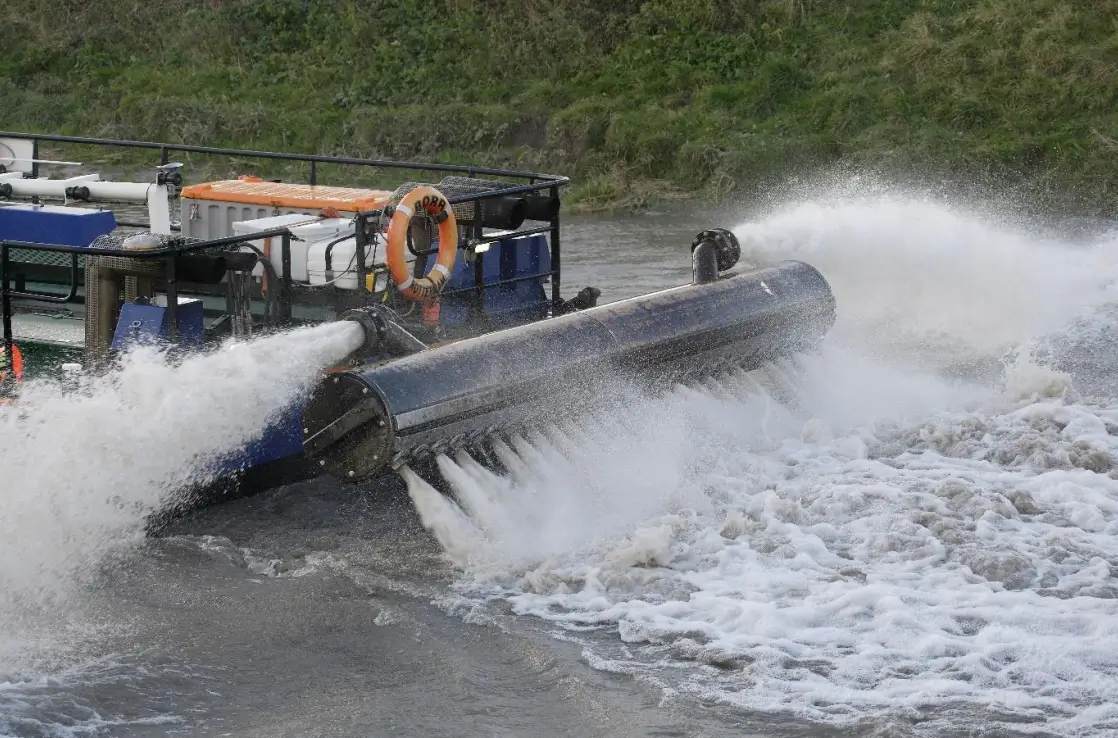
It has been established that water injection dredging (WID) is effective at putting sediment from the bed into suspension and since 2016 trials, overseen by HR Wallingford1, has done so at significantly reduced cost and environmental impact. However, monitoring of the channel profile shows us that, as well as maintaining the thalweg the WID has also destabilised the upper bank siltation and helped to maintain cross section shape to some extent. Unfortunately, the prevalence of dense vegetation on the banks not only captures incoming tidal silt but also strengthens the upper bank deposits and makes them more resistant to erosion. The annual cycle of WID and return has become less effective than it could be if the vegetation on the banks was better controlled.
The proposal to carry out enhanced shoulder works as part of the WID programme was agreed by the SRA for the 2023/24 works, the PSCA with the Environment Agency and under the cover of the updated and agreed Environmental Protocol between the Environment Agency and the Drainage Board.
These works were carried out in January 2023 over a period of 2 weeks. The enhanced WID work trial has shown that the upper bank profiles can be restored by mechanical excavator removing the silt and placing into the bed of the river and it can be effectively dispersed by the WID. The trial has improved the cross-sectional area (and thus the capacity) markedly and is approaching a cross-sectional area closer to the post pioneer dredge than has been achieved with WID alone in this area.
The success of this trial has lead the way for future WID operations to include bank works as part of the annual programme, limiting this to a single bank in any one year. The 2024/25 and 2025/26 WID Programmes were completed successfully and the results of these can be seen below.
Link to monitoring web page https://www.facebook.com/dredgingtrials
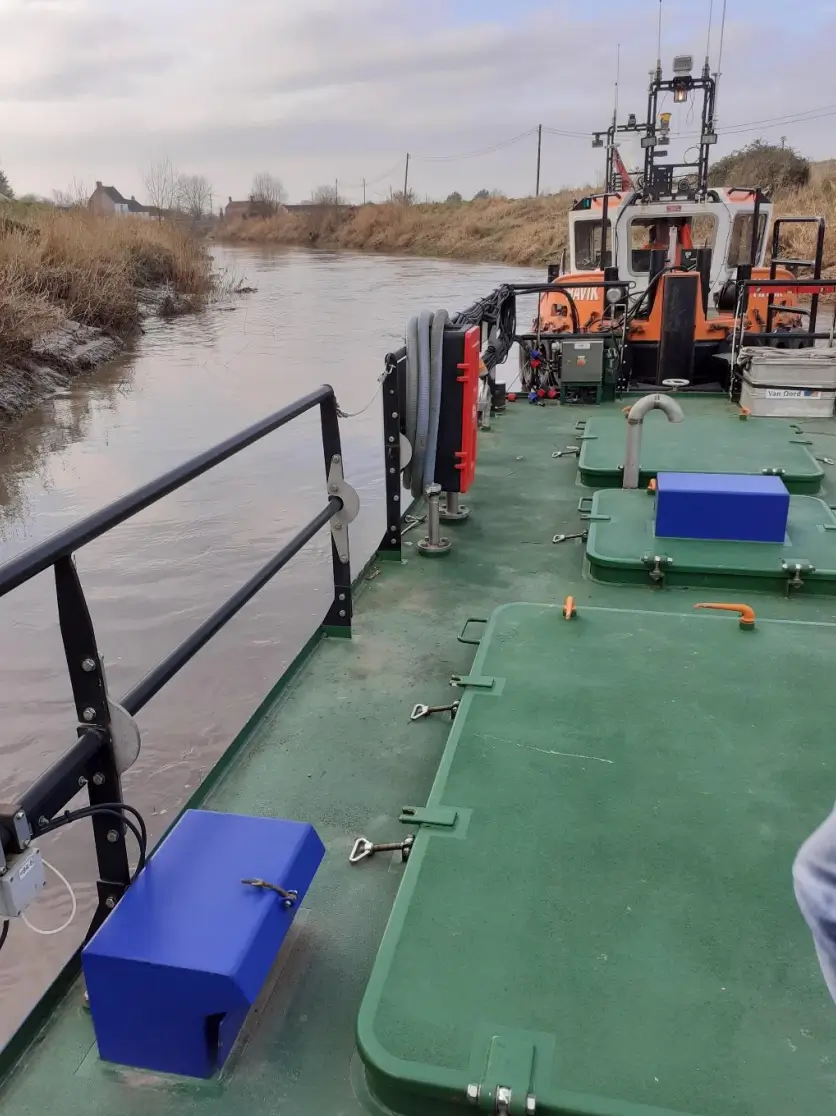
1 The silt put in suspension by the WID was found during the 2016 WID trial to stay in suspension until reagitated (usually wave action):
- Upstream monitoring data showed no signs of elevated turbidity throughout WID operations.
- Monitoring carried out at Somerset Bridge showed:
“Dense suspensions created by the WID during dredging periods were still fully in suspension on passing Somerset Bridge, into the middle and lower reaches of the estuary and with 12-hour on and 12-hour off WID dredging, the natural flow continued to effectively erode disturbed material from the dredge zone during the no dredging periods, efficiently enhancing the deepening process.”
- Visual evidence of the density plume passing Dunball Wharf was seen.